Martin Henson

Admin
Staff member
Registered
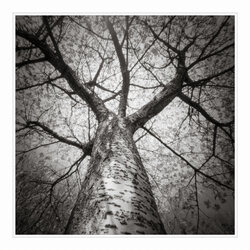
raw0060-copy.jpg
raw0060-copy.jpg
Pinehole Zero 2000 Camera
Fuji Acros @100iso
Developed in Xtol stock 8 mins 20c
Exposure 4 seconds @ f/138
 
Hmm, I don't really think the softness of a pinhole really suits a subject of such intricate nature Martin but that's just me. :rolleyes:
 
Having just returned from a short (Wet) break in the lakes i was spending more time in the shops than i would have liked. Interestingly a conversation with a gallery owner touched on the topic of paintings versus photographs in terms of popularity and sales. It turns out that paintings outnumber the photographs in every aspect, and there were some pretty good photographs on sale.
The paintings all had that ethereal quality that pinhole photography displays, maybe mega pixels and sharpness really count for a lot less than we think!! (The panoramic images were too high in contrast and over-sharpened in my honest opinion)
Maybe this was a fashion, i don't know but there was a lot of human and animal interests in the paintings (Mainly water colors) and i quite like this trend.
I must say that maybe pin hole would also work in pastel shades of color. Many years ago one of my favorite slide films was an Agfa film 1600 iso i think that i would rate at 3200 and this gave a lovely grainy romantic feel to an image.
Regards,
Alan
 
Interesting Keith. For the medium of Pinhole what do you think marry's well with it

I couldn't tell you that even if I wanted to Ian because for me it's personal and depends on the subject - some work for me and some don't - there is no set formula but a pinhole for a pinhole's sake doesn't make it a good picture. I do like to see them attached to a narrative but they have to be recognisable in that narrative - let me explain. In a post there was a link to a series of pinhole image with respect to a narrative on the Battle of Waterloo. For my money none of the images shown therein had any recognisable link to the narrative - they could have been taken anywhere, so were they there simply to invoke a feeling of nostalgia (?) by virtue of the 'pinhole effect' - I don't know but for sure it didn't work on me - but perhaps I'm just a grumpy old sod!:p I'm not sure all this makes sense but there you go.
 
I think the latter ;)

Pinhole is just a different way to capture an image, they are softer however they do produce a (for me and thousands of other pinhole shooters) different look that one either likes or not, I personally like the almost pictorial and gentle feel they give. I do agree Alan that sharpness in some aspects of photography counts for less, that's what gives the Pinhole image its character and unique look. If pinhole images were tack sharp with high contrast why use one at all.

I think any image that catches ones eye and pleases is good for pinhole as any other camera.

Martin
 
...... I personally like the almost pictorial and gentle feel they give. I do agree Alan that sharpness in some aspects of photography counts for less, that's what gives the Pinhole image its character and unique look. If pinhole images were tack sharp with high contrast why use one at all. .....
Martin

:) I did say I liked some pinholes Martin but being a pinhole image doesn't automatically make it a good image or an appropriate image - I just think it's all very subjective and personal, perhaps even more so that conventional images.:eek::D:D
 
I can't speak for Keith, but in essence I understand what he means in his comments regarding pinhole photography. Traditionally pin hole is presented in the way demonstrated in the link below, (can't remember if I got this link from the forum or elsewhere)

https://ianburtonphotography.wordpress.com/gallery/

Regards,
Alan
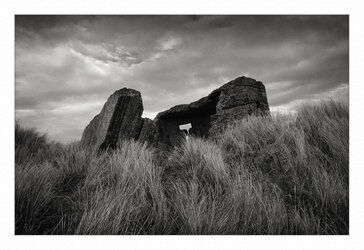
 
... I do like to see them attached to a narrative but they have to be recognisable in that narrative - let me explain. In a post there was a link to a series of pinhole image with respect to a narrative on the Battle of Waterloo. For my money none of the images shown therein had any recognisable link to the narrative - they could have been taken anywhere, so were they there simply to invoke a feeling of nostalgia (?) by virtue of the 'pinhole effect' - I don't know but for sure it didn't work on me - but perhaps I'm just a grumpy old sod!:p I'm not sure all this makes sense but there you go.

The photos depicted well-known locations on the Waterloo site including La Haye Sainte, captured by the French, Hougoumont Farm, famously held by the British against powerful odds, and Plancenoit Farm, taken by the Prussians in their initial attack on the French lines. The wide landscape shots very often show the famous Lion Mound looming on the horizon. Many of the buildings survive from the battle, including Hougoumont Farm, which was restored in time for the 200th anniversary of the battle a couple of years ago with a £1m donation each from the UK and Walloon governments as well as substantial private donations.

All that apart, I find the photos to be deeply atmospheric, with a clear narrative, and that they quietly yet spectacularly effectively fulfill the incredibly elusive and difficult task of trying to pursuade photographs of a simple landscape to somehow reveal a story, or at least a sense of something significant and in this case very dark having taken place there. They make me wish that I had used a pinhole camera in my Somme project. I might have to start again!

http://www.telegraph.co.uk/history/...re-Wellington-won-the-battle-of-Waterloo.html
 
Last edited:
I can't speak for Keith, but in essence I understand what he means in his comments regarding pinhole photography. Traditionally pin hole is presented in the way demonstrated in the link below, (can't remember if I got this link from the forum or elsewhere)

https://ianburtonphotography.wordpress.com/gallery/

Regards,
Alan

Some absolutely superb pinhole work in there, when you work out how to make the links work (my, that was a lot of works!).

As an aside I was amused to run into this (digital B&W) shot in his galleries;

https://i0.wp.com/ianburtonphotography.files.wordpress.com/2016/04/4.jpg

And here a photograph taken by yours truly in 2014;

DSC_4253_1024.jpg
 
The photos depicted well-known locations on the Waterloo site including La Haye Sainte, captured by the French, Hougoumont Farm, famously held by the British against powerful odds, and Plancenoit Farm, taken by the Prussians in their initial attack on the French lines. The wide landscape shots very often show the famous Lion Mound looming on the horizon. Many of the buildings survive from the battle, including Hougoumont Farm, which was restored in time for the 200th anniversary of the battle a couple of years ago with a £1m donation each from the UK and Walloon governments as well as substantial private donations.

All that apart, I find the photos to be deeply atmospheric, with a clear narrative, and that they quietly yet spectacularly effectively fulfill the incredibly elusive and difficult task of trying to pursuade photographs of a simple landscape to somehow reveal a story, or at least a sense of something significant and in this case very dark having taken place there. They make me wish that I had used a pinhole camera in my Somme project. I might have to start again!

I have no doubt that to a historian or someone with a deep knowledge of the battle such as yourself Toby they will be recognisable and meaningful but I was speaking from my perspective as someone with only a sketchy knowledge. Note that I never said I didn't like the pictures, as stand-alone images they are very good. :) However, 'Horses for Courses' is an apt adage I think. ;)
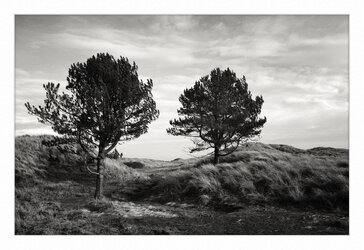
It seems you beat Mr Burton to this shot by a couple of years Toby. :)
 
Hmm, 'once is luck, twice is a coincidence, three times is a pattern' - makes you wonder ........:confused: I bet you're going through your files as I type Toby. ;) (Apologies to the original Moscow Rules).

Lovely pictures by the way. :)
 
Back
Top