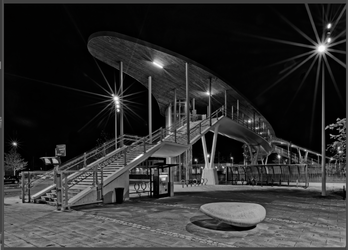
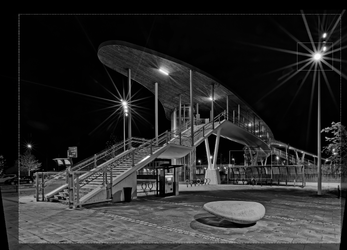
Rattray head lighthouse.

Another reason for not relying on the histogram is that it only reflects the contents of the JPEG, which is embedded in the RAW file. It is only really in the RAW file that you find the full dynamic range and, thus, much more detail in the shadows.

Just as with film, I never get to see the final result of my digital images, which are RAW, until they have been processed. And I rarely, if ever, check the rear screen because I have learnt, just as I had to with film, to get it right at the time of shooting. It can be a challenge to start with but, in the end, I have found it to be worth the effort.

Just found this article on ETTR, which might explain our reticence to use it.
 
Last edited:
@Helen Summers

Thank you Helen.

It clearly works for you and that's all that's needed.

Just as a sidenote, my digital camera (Nikon Z7) allows me to check the histogram in the viewfinder before I release the shutter. I use the exposure compensation buttons to bring the highlights into the histogram. I firstly reduce the exposure until I can see the brightest highlight with a gap between it and the extreme right hand side of the graph. I overdo this compensation so the gap is quite large in case there are hidden highlights I have missed. I then carefully increase it a quarter stop at a time until that brightest highlight has the smallest gap between it and the right hand edge of the graph. It is more difficult to explain than to do but only takes a few seconds. As such, I take just the one shot with no blown highlights and good dynamic range.
 
Last edited:
@Steve

Thanks for your comment Steve.

As I understand it, ETTR aims to expose for the highlights and is commonly used for digital photography. I haven't come across ETTL but I assume this is simple extrapolation meaning to expose for the shadows, as you would for film.
 
Last edited:
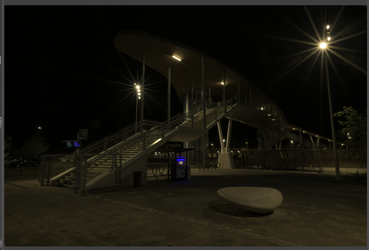
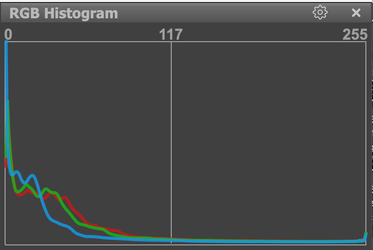
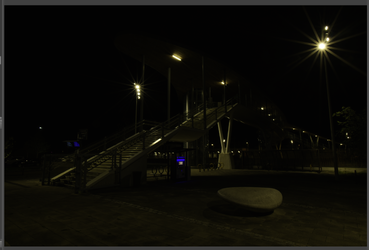
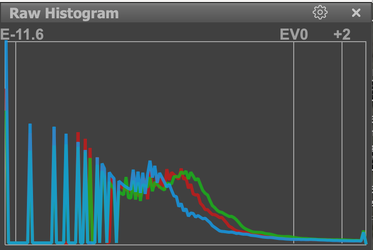
Just as an example of the differences between a JPEG file, as shown on the rear screen of a camera, and the full range RAW file.

Exposed for the brightest highlights at +2EV, here is the untreated JPEG…

Capture d’écran 2026-04-28 à 16.03.47.png

… and its histogram…

Capture d’écran 2026-04-28 à 16.18.03.png

… and here is the untreated RAW…

Capture d’écran 2026-04-28 à 16.03.34.png

… and its histogram…

Capture d’écran 2026-04-28 à 16.17.51.png.

Now, the unprocessed RAW may look a lot darker but, once it has been processed to reveal the shadows, things change rather drastically…

Capture d’écran 2026-04-28 à 16.06.54.png
 
Last edited:
What an amazing response from all of you concerned, I have today started experimenting with ETTR, and I am in the process of reading the article posted by Joanna Carter have been a massive help for me. Blinkies are in fact a common sight on my camera screen after I take a pic.
I have been practicing in the house with my camera, setting it up with a grey board to begin with and going from there.
Its indoors but I can see it now, how to adjust to get the histogram to travel to the right, and make a dull white in camera object (tea cup) to actually look white.
I would expect things to go better when outside in natural light, I will learn as I go along.
Bit I do think that this could defiantly be a turning point in my photography.
I will finish reading the article.
PS. I have taken the ISO from auto to manual to try and learn, if only to see what a difference it makes to exposure.
I may soon post some photographs for discussion on this matter.
 
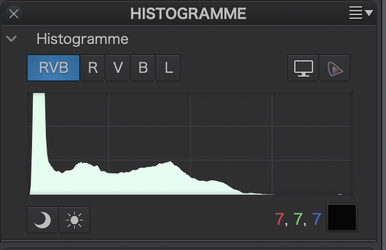
Would you share the histogram of the final image please Joanna?

Is the processing simply a matter of monochrome conversion and level shifting or something more sophisticated?
 
@Glenn OMG I looked up ETTR and ETTL I think the terminology is a bit confusing to how my mind works!

It seems to contradict my thoughts - it also seems to contradict (but this is not my intention) the main observation of the thread about increasing the exposure for white (which I know is correct but can lead to blowing the highlights if you are not careful) so for clarity this is what I do - I am a simple soul, it is not technical or perfect but works well most of the time for how I shoot:

For film I normally over expose about 2/3 of a stop and develop accordingly.
For digital I normally under expose about 2/3 to 1 stop.
For digital I always shoot in RAW (if it's available)

Although I have shot large and medium format I have settled with 35mm and much smaller sizes as they suit the way I work. If you are developing just one large negative it is a different ball game and mindset so the above is for 35mm and smaller sizes.


@Oldbones Even using RAW (which I always do if I can) unlike modern cameras my Nikon D70s does not have a great dynamic range (D70s only shoots a reduced size RAW file called compressed RAW)- it will blow highlights very easily if you are not careful - when I now rarely use it I set the exposure compensation from -0.7 to -1.0 of a stop and shoot aperture priority.

I shot many weddings (hence my paranoia about blowing highlights), proms, portraits on a D70 and D70s, they have nice sharp sensors and can use old screw AF lenses.

If you want to get the best out of your D70s shoot RAW and run it through DXO PureRAW it will amaze you how good your old digital camera and lenses are - in my mind probably the best upgrade to processing RAW files you can make (especially if you use old kit like me!). Best to check if your camera and lens combination is covered there is a list on their website and you can normally get a free trial to see you what you think first.

As a general rule if lighting is a bit tricky I point my camera at some well lit grass/leaves - these are roughly around 18% grey (the same as your camera meter) press AEL button (Auto Exposure Lock), focus on the subject and Bobs (hopefully) your uncle.....
 
I will finish reading the article

Not forgetting that, even this article doesn't get everything right, but one very important topic is the paragraph marked "5. ETTR Method Two"

I can't emphasise enough that, if you can get your head around it, you are far better off using your camera in all-manual mode, with spot metering, not forgetting that you don't have to measure the exposure at the very moment you press the shutter button. Once you have set things up for the scene, you can quite happily change the framing, as long as the measured area is still in the frame.

Oh, how I wish I could show you, on your cameras just how simple manual operation can be. All this ETTR stuff gets in the way and confuses much more. I will repeat something I said earlier - do not rely on, or even look at, the histogram. It was never necessary with film cameras and, once you learn, what I will call, "the digital zone system", you just flat out don't need it for digital.

Would you share the histogram of the final image please Joanna?

Capture d’écran 2026-04-29 à 09.55.07.png

But you do need to bear in mind some of the adjustments I made in PhotoLab (the full blown editor, which contains PureRAW), like selecting the black and white points with the Smart Lighting tool…

Capture d’écran 2026-04-29 à 09.57.20.png

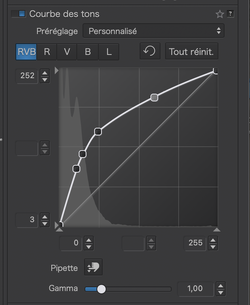
… and a very particular Tone Curve…

Capture d’écran 2026-04-29 à 09.54.31.png

Is the processing simply a matter of monochrome conversion and level shifting or something more sophisticated?

Just as you need to use dodging, burning and grading under an enlarger, you need to learn the digital equivalents.

Personally, I use DxO PhotoLab with their FilmPack add-in. I usually choose the Fuji Acros 100 film emulation.

Why do I use PhotoLab? simply because I can shoot at anything up to 25K ISO if necessary and the DeepPRIME noise reduction will take care of any noise without any loss of detail. Although, I always try to use the lowest practical ISO.
 
I just want to drop a foot note about which metering mode to use.

The examples we have been discussing require spot metering to cope with possible blown highlights but, if the lighting is more general then I tend to use centre-weighted, metering on the brighter areas.
 
Thanks Joanna. Just want to acknowledge your post and the effort you put into it. I'll aim to give a more considered response later.
 
Last edited:
Thank you so much Joanna Carter, amazing info and such a great help.
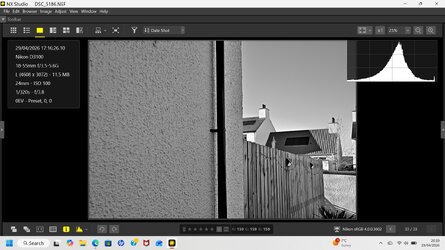
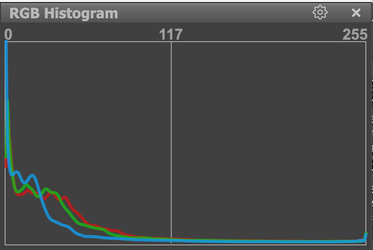
Now I have a photograph right here to show.
It not about the subjects in it, just about the histogram.
I have done some trial and indeed errors in the last couple of days.
Went into the back yard tonight after work, took a couple of shots.
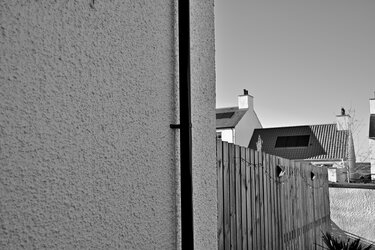
Now its monochrome but the photograph came out better that I expected.
Again thank you so very much.
Several whites, shadows and darks as well as texture.
Not too much editing was done.
Exposeure trial.jpg
And here is the photograph after it was turned to a Jpeg.
DSC_5186.JPG
 
Last edited:
@Glenn OMG I looked up ETTR and ETTL I think the terminology is a bit confusing to how my mind works!

It seems to contradict my thoughts - it also seems to contradict (but this is not my intention) the main observation of the thread about increasing the exposure for white (which I know is correct but can lead to blowing the highlights if you are not careful) so for clarity this is what I do - I am a simple soul, it is not technical or perfect but works well most of the time for how I shoot:

For film I normally over expose about 2/3 of a stop and develop accordingly.
For digital I normally under expose about 2/3 to 1 stop.
For digital I always shoot in RAW (if it's available)

Although I have shot large and medium format I have settled with 35mm and much smaller sizes as they suit the way I work. If you are developing just one large negative it is a different ball game and mindset so the above is for 35mm and smaller sizes.


@Oldbones Even using RAW (which I always do if I can) unlike modern cameras my Nikon D70s does not have a great dynamic range (D70s only shoots a reduced size RAW file called compressed RAW)- it will blow highlights very easily if you are not careful - when I now rarely use it I set the exposure compensation from -0.7 to -1.0 of a stop and shoot aperture priority.

I shot many weddings (hence my paranoia about blowing highlights), proms, portraits on a D70 and D70s, they have nice sharp sensors and can use old screw AF lenses.

If you want to get the best out of your D70s shoot RAW and run it through DXO PureRAW it will amaze you how good your old digital camera and lenses are - in my mind probably the best upgrade to processing RAW files you can make (especially if you use old kit like me!). Best to check if your camera and lens combination is covered there is a list on their website and you can normally get a free trial to see you what you think first.

As a general rule if lighting is a bit tricky I point my camera at some well lit grass/leaves - these are roughly around 18% grey (the same as your camera meter) press AEL button (Auto Exposure Lock), focus on the subject and Bobs (hopefully) your uncle.....
Thank you, I will look into some of this.
I always shoot in manual and in RAW.
Old kit yes I really do like it, just want to get knowledgeable enough to grt the best as I can get from it.
The exposure lesson we have just had has really changed things for me and I hope others as well.
I usually shoot in Black and White so I am not fully aware about the ins and outs of that, but I have posted a screen shot earlier tonight.
 
Another reason for not relying on the histogram is that it only reflects the contents of the JPEG, which is embedded in the RAW file. It is only really in the RAW file that you find the full dynamic range and, thus, much more detail in the shadows.

Just as with film, I never get to see the final result of my digital images, which are RAW, until they have been processed. And I rarely, if ever, check the rear screen because I have learnt, just as I had to with film, to get it right at the time of shooting. It can be a challenge to start with but, in the end, I have found it to be worth the effort.

Just found this article on ETTR, which might explain our reticence to use it.

I should say that I come to this from the opposite direction as I dealt with television product design and factory statistics professionally. Histograms of various forms were my stock-in-trade, so just as the zone system was easy to adapt from your considerable film photography experience into a digital practice, my histogram experience did the same for me. Clearly the majority of contributors here don't have that background and don't see the world as I do.

Thank you for the link which I have open in front of me. It makes interesting reading. Despite my comments below, I learned from it.

I would say that I agree with you, it isn't sensible to judge image quality from the jpeg displayed on the small screen. I don't do that either.

That said, the brightness values held in the JPEG file contain a much larger data set than is available from even a matrix metered exposure measurement set to read the maximum number of points. While it is true that JPEG compresses the RAW data from, say, 12 bits (sensor dependant) down to 8, it is generally the shadow detail which is lost. Provided the highlights aren't blown, the whites in the JPEG data and the whites in the RAW file image should be represented. They may be scaled differently in the histograms but neither should be blown out.

JPEG also compresses data reducing the number of samples in areas where there are large areas with the same value which is why busy photographs with more detail have larger file sizes. However, the highlight values should remain unmodified.

As such, I think the camera software engineers have good reason to use the JPEG data for the histogram knowing that the highlight data will be preserved.

I have to say I recently took photographs across water into the sun (the sun itself was out of shot) resulting in some very detailed specular highlights and larger areas of white. I used ETTR and none of the highlights were blown in the RAW file which, I think, supports what I am saying. The RAW histogram still had a small amount of margin to the right but it amounted to no more than a third of a stop.

Regarding noise at higher ISOs, I don't think I agree with Spencer's conclusions for the simple reason that noise, on average, has a pretty constant amplitude meaning it affects shadow detail more than the mid greys or highlights. That is because the shadow detail only uses a few data bits with a dynamic range comparable to the amplitude of the noise and gets swamped. However, ETTR still ensures highlights aren't blown and that the RAW image fits the part of the curve where noise has the least effect.

If you are still with me, none of the above negates the use of the zone system for both film and digital as the quality of the photographs both you and Helen contribute to this forum attest. It is simply that ETTR works for me and, provided I am careful to look for hidden highlight peaks in the histogram before I release the shutter, I have yet to have an issue with it.

Regarding your later posts, I intend to respond soon. I am intrigued by both and I know that very good points are made.
 
Last edited:
1777549283798.png
1777548896222.png


@Joanna Carter

It's daft o'clock in the morning and this has been keeping me awake o_O. I need to write it down and then sleep.

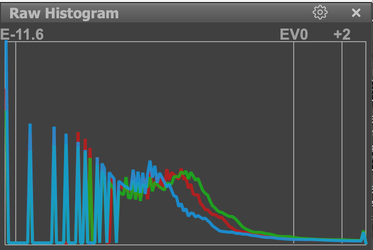
I think I understand the difference between the two histograms.

The first has a linear horizontal scale between 0 and 255, in other words 256 states which is the equivalent of the 8 bit word used in JPEG.

The second has a logarithmic horizontal scale because it is calibrated in EV. We know that 1EV is equivalent to 1 stop and if we reduce it by one stop the amount of light falling on the sensor halves. It is this halving that makes it logarithmic. It looks to cover about 14 stops of dynamic range. JPEGs have 8 stops (7 binary halvings) and so most of the left hand side (shadow area) is missing. The missing data does not affect the highlights.

Logarithmic graphs stretch the data to the left and squeeze it to the right, in other words it gives more detail in the shadow areas and fills the right hand side with more curve.

As such, the two graphs are showing the same data even though their curve shapes are different. The clue is the small peak at the very right hand side of both graphs. This small peak is just below the whitest white in both cases.

So if you adjust exposure so the furthest right peak is just to the left of the whitest white on the JPEG histogram in camera's viewfinder, that same peak will appear in the same place on the RAW file histogram.

So ETTR is valid in that respect.

I think.

Sleep tight. :cool:
 
Last edited:
Not forgetting that, even this article doesn't get everything right, but one very important topic is the paragraph marked "5. ETTR Method Two"

I can't emphasise enough that, if you can get your head around it, you are far better off using your camera in all-manual mode, with spot metering, not forgetting that you don't have to measure the exposure at the very moment you press the shutter button. Once you have set things up for the scene, you can quite happily change the framing, as long as the measured area is still in the frame.

Oh, how I wish I could show you, on your cameras just how simple manual operation can be. All this ETTR stuff gets in the way and confuses much more. I will repeat something I said earlier - do not rely on, or even look at, the histogram. It was never necessary with film cameras and, once you learn, what I will call, "the digital zone system", you just flat out don't need it for digital.

...
I am very much with you on this Joanna. I use vintage film cameras without built-in light meters so I am familiar with using manual mode and extend that practice to digital photography, especially in my home studio. When I am out and about I tend to use professional ("P") mode which I find is very similar to the EV way of working on my 1960's Rolleiflex T. In other words, once the EV is set on the Rollei then the aperture and shutter speed are coupled together to be adjusted by a single control lever. In the digital case, "P" mode also couples the aperture and speed control. I can vary the combination of shutter speed to aperture with the thumbwheel and use exposure compensation to bring the highlights in..

Regarding the screenshot of the curves adjustment you used to recover the night-time shot, thank you for this. I am not a complete beginner at curves adjustment but I do need to refine my technique. Understanding how others achieve their results helps me to finesse my practice. So, for example, I have two of your earlier curves examples programmed as presets: one to recover shadows and one to simulate lith. I continue to use Martin's contrast grading and foreground sharpness techniques. I find it interesting how much you are able to achieve with a well chosen mid-tone lift, so something learned.
 
Last edited:
@Glenn OMG I looked up ETTR and ETTL I think the terminology is a bit confusing to how my mind works!

It seems to contradict my thoughts - it also seems to contradict (but this is not my intention) the main observation of the thread about increasing the exposure for white (which I know is correct but can lead to blowing the highlights if you are not careful) so for clarity this is what I do - I am a simple soul, it is not technical or perfect but works well most of the time for how I shoot:

For film I normally over expose about 2/3 of a stop and develop accordingly.
For digital I normally under expose about 2/3 to 1 stop.
For digital I always shoot in RAW (if it's available)

Although I have shot large and medium format I have settled with 35mm and much smaller sizes as they suit the way I work. If you are developing just one large negative it is a different ball game and mindset so the above is for 35mm and smaller sizes.
No worries Steve. In any case I was able to follow the logic of your first post with no problem.

Regarding measurement technique, whatever we use it only has to work. If we are getting good results then that surely is enough.
 
Last edited:
Back
Top