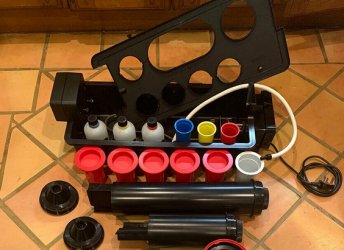
I have used one for around 30 years and whilst they are not a precision piece of kit they do help with keeping the temps close enough to get a result. It may take a while to get the thermostat set so that you can guarantee more or less you will be in the right area. with the setting of 20c for B&W films you may find that you actually need 22 even 23 degrees. The reason for this is whilst the main water bath may get to 20c the plastic beakers seam to absorb some of the heat and unless you are prepared to wait a long time you have to set the temp a touch higher. for colour neg films the temp is 38C but I set mine to about 41C
Colour negative film is about as easy as it gets with a JOBO, but transparencies, especially the first developer has to be pretty well spot on otherwise when you come to the 2nd developer if the 1st developer was too low they will appear a little dark, too high and they will appear washed out and lacking in saturation.
The warming of the tank beforehand will help avoiding the temp too cold and some swear by a water bath beforehand at 40C to heat the tank up. I am a little different and don't like the idea of a water bath, so when the film is loaded into the tank and before it is switched on I place the developing tank into the water bath when it is cold and during the time it takes to heat up to the correct temp this also raises the tank and the film it contains up as well. I have never had a problem with that method.
Take care when putting the lid on the tank after loading the film because it sometimes may seem as if it is on and the cap secure, but it may not be. When this happens during the processing the developer fixer etc will leak out and the film will be ruined. The way to check, is to hold the lid and tank in your hands and give them an opposite twist and if the lid turns it turns, then the lid isn't secure. If it doesn't, you are good to go.
When processing transparencies, Tetenal used to advise you to used dedicated beakers for the 1st developer. 2nd developer and bleach fix stages. I don't know if they still do. This I understand is due to the plastic used in making the beakers can absorb some of the chemicals and in extreme cases cause cross contamination which can result in odd colours. I use graduated certified glass ones for my colour negative processing that fit snuggly into the holders in the JOBO tank. They wash out easily and don't get contaminated
You will need an accurate thermometer and I still use a certified mercury one which is as old as my JOBO. You cannot buy them now! I also have a digital electronic one, whilst not certified as accurate is very close to the Mercury one that makes no matter.
You say it is your intention to process transparencies. The E6 chemicals do not have a very long shelf life once opened. Perhaps a month so. With the price of a kit and the cost of film. plus mounting, for me it isn't a viable option (About £20 to £25 a film) and to be honest I find the process boring. Colour negative developer does seem to have improved over the last few years and remains stable for a long time and the developing time is an awful lot quicker.