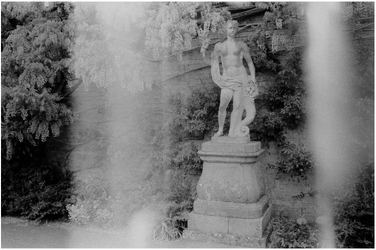
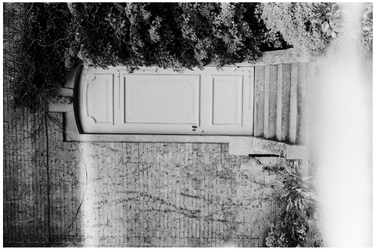
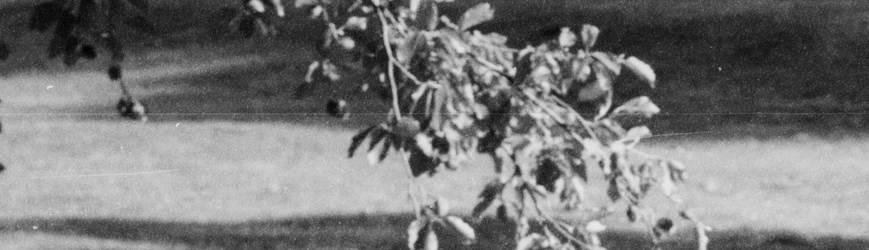
Vertical light leaks at start of film - first 3 to 4 exposures, Leica rangefinder

ian_s

Well-Known Member
Registered
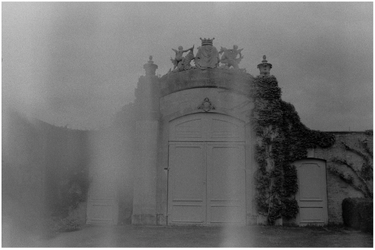
I am seeing on most films (a variety of different makes) with vertical band light leaks. The leaks extend through the sprockets (top & bottom) and exposures after number 4 have leaks that don't extend from sprockets to the image decreasing in seriousness with each additional exposure. There is never a problem after exposure 7 or 8. I am aware that sometime poor film handling (loading in bright light can cause this issue) however I have lately been ultra careful and tried using another similar camera and don't see this problem. I am also seeing some horizontal scratches on the negatives.

See attached images (no 1, 2 and 3 from a film). Is there a common issue that could be causing what I've explained ? Any quick way of checking this before I dispatch the camera for CLA ?

Thanks
Screenshot 2026-10-25 at 11.46.11.png

Screenshot 2026-10-25 at 11.46.01.png

Screenshot 2026-10-25 at 11.46.49.png

Screenshot 2026-10-25 at 11.41.47.png
 
I have looked at the examples and I don't think it is the shutter. If it was, and as you say it 'only' affects the first few frames. I think it is reasonable to expect if it was the shutter it would continue right a way through the cassette end to end. Plus if it is on the edge rebate that is not in the path of any light passed by the shutter, so that should be still clear film.

Is the camera loaded from the base, or does it have a removeable back? Also looking at the marks on the frames, they do not appear to be equally spaced which would also be expected. As you say the marks diminish the further up the cassette you go, and to me this points to alight leak somewhere on the back, again this points away from the shutter. Do you struggle to get the cassette to sit evenly in the film chamber, because the leak into the edge rebate and the uneven spacing point to a light leak involving the cassette somehow?

I am not an expert in Leica's, so cannot go further than this
 
John / Martin,

It's a Leica M series camera so the film is loaded from the base, with the hinged back. The shutter is horizontal cloth shutter. Elsewhere I've read that light is leaking into the film cassette and this is why the leaks are worse along the sprockets. It was referred to light pipeing. All of this seems plausible but I don't understand why it occurs in one camera and not another I used and continues after I followed a very cautious film loading regime. The only difference between the two was the second Leica was an M7 which I believe has an electronically controlled shutter. I am left wondering if there is any adjustment related to the way the film is pulled through from the cassette that exposes one exposures light to the previous one that is then mitigated by more film on the other spool adding some tension / control.

Either way I wanted to feel I had a bit of a diagnosis before requesting a CLA that may not resolve the problem.

Thank
 
I am seeing on most films (a variety of different makes) with vertical band light leaks.
Might be about to teach grandma to suck eggs here but ...

Are these films commercially loaded or bulk loaded at home?

How many films have you tried in this camera that show the problem?

Are you processing at home or commercially?

How many shots per film? 24, 36 or some other quantity?

Can you inspect the light seals and are they OK?


​

More ideas from Gemini ​

  • Pinholes or Pin-sized Cracks in the Shutter Curtain:
    • The Cause: Over time, the rubberised cloth of vintage focal-plane shutters can dry out, crack, or get burned if the camera is left lens-first in direct sunlight without a lens cap.
    • The Effect: This leaves distinct, sharp, bright streaks running perpendicular to the direction of travel (vertical bands on an M-series camera, since the curtains travel horizontally).
  • Leaking Light Seals / Body Door or Baseplate Gaskets:
    • The Cause: Bottom-loading Leicas don't typically use foam seals around the removable baseplate (relying instead on precision light-tight metal lips), but older vulcanite, rangefinder window frames, or hinge/door points can degrade.
    • The Effect: Light leaks from body seams usually show up as diffuse, glowing orange or red light streaks bleeding across the edges of the film or bleeding into the sprocket holes.
  • Shutter Capping or Bouncing (Timing Issues):
    • The Cause: If the mechanical shutter speeds are sluggish, one curtain might bounce or lag behind the other (known as "capping").
    • The Effect: This results in uneven exposure across the frame—often appearing as a broad, gradient band of underexposure or overexposure.
      • Check the Film Rebate (Sprocket Edge):
        • If the fogging extends past the frame into the sprocket holes and edge markings: The leak happened outside the film gate—either during loading/unloading, or from a loose baseplate / shell seam.
        • If the fogging stops sharply at the film frame border: The leak happened inside the mirror/shutter box (e.g., curtain pinholes or light leaking through the lens/housing while the shutter was closed).
      • Check the Baseplate Fit: Inspect the perimeter lip of the removable baseplate for tiny dings, metal warping, or play in the locking key assembly.
      • Flashlight Test: In a dark room, take off the lens, open the bottom plate, place a bright LED light inside the body cavity, and inspect the baseplate seams and rangefinder housing for light escaping.
 
Might be about to teach grandma to suck eggs here but ...

Are these films commercially loaded or bulk loaded at home?

How many films have you tried in this camera that show the problem?

Are you processing at home or commercially?

How many shots per film? 24, 36 or some other quantity?

Can you inspect the light seals and are they OK?

Thanks for the reply. The films are all commercially loaded, Kodak, Ilford & Leica. All are 36 exposures varying ISO from 50 to 400. I can't see any issues with the seals. I have seen the issue with 6 to 7 films.
 
Martin, I think you are close. I was thinking about your point number 2. light leaks and possibly 3. I am not familiar with Leica's and I don't think they use light proofing but rely upon a good close mechanical fit. Pin holes in a shutter curtain if it were fabric and the shutter travel horizontally they would be more defined and running left to right. I think the Leica M series shutters were/are fabric.

I would have said the problem lies with the cassettes, but as they are different makes. of film. I cannot see where the problem is coming from
 
I have just checked with a source of information on Leica's and this is what is said:-

Why Leica Doesn't Use Foam Light Seals
Traditional cameras (like many Nikon, Canon, or Olympus SLR models) use strips of open-cell foam or felt around the edges of the swinging back door. Over decades, this foam degrades into a sticky, black goo that causes light leaks and must be replaced.
Leica avoided this vulnerability completely:
  • The Labyrinth Seal: The edges of the back flap and the bottom plate are engineered with tight, interlocking metal grooves. When closed, these grooves create a "maze" that light cannot bend around to reach the film.
  • Cloth/Felt Exceptions: The only non-metal light-blocking materials in a Leica M are internal fabric curtains around the shutter mechanism and occasionally a small piece of velvet-like material near the film chamber entry, but never the perishable foam strips found on the back doors of Japanese SLRs.
Because of this precise mechanical engineering, a 50-year-old Leica M camera will rarely suffer from the back-door light leaks common to vintage SLRs, even if it has never been serviced.
 
Back
Top