

-
Thank You For Visiting... Please Click Here and sign up to contribute
You are using an out of date browser. It may not display this or other websites correctly.
You should upgrade or use an alternative browser.
You should upgrade or use an alternative browser.
First film through my Nikon F
- Thread starter Glenn
- Start date

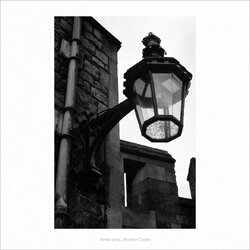





A bit of a mishmash but the film has been sitting in the camera for over a year and it finally got developed and scanned. These were the best of them.
Nikon F with 50mm. Nikkor-S Auto 1:1.4. Agfa APX 200 developed and scanned by Photohippo in Burnley. Basic scan and I want to try home scanning with my camera at some point. I have just purchased a roll of tri-X now that I know it works.
Nikon F with 50mm. Nikkor-S Auto 1:1.4. Agfa APX 200 developed and scanned by Photohippo in Burnley. Basic scan and I want to try home scanning with my camera at some point. I have just purchased a roll of tri-X now that I know it works.

I like the 5th one the best. Not meaning to be critical (although I am) they all look a tad dark/muddy for me but it is harder using a real camera than a phone especially if you are not in control of the processing or scanning. I have an F2 bought it well used about 35 years ago they are great cameras (if a tad heavy). I will dig it out - eventually - and hopefully be brave enough to post some.
Thanks Steve. I am not sure I have the post processing right yet although I did try for a full tonal range in curves and some mid-tone brightening. Need some more practice I guess, although I quite like the darkness of 5 and 6. They won't be to everybody's taste I know.
Part of the issue might be exposure. I used my phone as a meter for most of them but have bought a sekonic in the meantime on Martin's recommendation.
Part of the issue might be exposure. I used my phone as a meter for most of them but have bought a sekonic in the meantime on Martin's recommendation.

We all need practice, everyday is an opportunity to be better, you have a lot of good ideas and photos, I look forward to seeing your next roll...Thanks Steve. I am not sure I have the post processing right yet although I did try for a full tonal range in curves and some mid-tone brightening. Need some more practice I guess, although I quite like the darkness of 5 and 6. They won't be to everybody's taste I know.
Part of the issue might be exposure. I used my phone as a meter for most of them but have bought a sekonic in the meantime on Martin's recommendation.
Thanks Alister. There is more detail in the original scan that seems to have been lost in the downsizing to 1048 pixels. In the original, glazing bars can be made out which shows them to be casement windows. I guess they have been blacked out from behind for whatever reason.Like these Glenn, especially the Windsor image which illustrates its witness to passing time eg the two (very different) drain pipes the "blocked up" something or other - looks like a mini doorway.
Thanks!
Last edited:
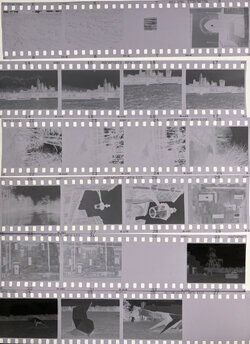
The negs are back now and it is obvious the earlier ones are very thin. At that time I was relying on the viewfinder app on my phone and the camera's internal meter (which really needs a mercury cell). Densities where I used a proper Sekonic Studio III are much better (as you might expect). I used the sekonic for the Rolleiflex pics too and the density of those negs also seems OK. That is good news as it means the shutter timing should be about right in both cameras.
Last edited:
Yes not great, reminds me of how many of my Tmax films looked when I developed them - they never seemed to clear no matter how long I left them fixing or how long I washed them - they had a magenta cast as if the fixer was off or not strong enough - I switched to Neopan and was a lot happier still the only way is up and it always takes a few rolls to get things as you want them - unfortunately to get things as you want them you often have to do it yourself.
Last edited:
Thanks for the support Steve.
I guess they use colour chemicals these days. Certainly my old negs fixed with acufix don't have a colour cast but I wonder how much difference it makes once filtered in post? A slight loss in contrast perhaps? Unfortunately I don't expose enough film these days to warrant reinvesting in a tank and chemicals so, for the moment, I will have to rely on a lab. Thinking to try Ilford's laser printing as it goes.
I guess they use colour chemicals these days. Certainly my old negs fixed with acufix don't have a colour cast but I wonder how much difference it makes once filtered in post? A slight loss in contrast perhaps? Unfortunately I don't expose enough film these days to warrant reinvesting in a tank and chemicals so, for the moment, I will have to rely on a lab. Thinking to try Ilford's laser printing as it goes.

There is an adapter that allows you to fit a silver cell. They are not cheap - about £30 or so but the solve the problem for once and for all. They are the same external size as a mercury cell was, but you fit a 1.5v silver cell inside. they work through a tiny diode that reduces the 1.5v to 1.35v as per the Mercury type. The code for the adapter is MR-44View attachment 19163
The negs are back now and it is obvious the earlier ones are very thin. At that time I was relying on the viewfinder app on my phone and the camera's internal meter (which really needs a mercury cell). Densities where I used a proper Sekonic Studio III are much better (as you might expect). I used the sekonic for the Rolleiflex pics too and the density of those negs also seems OK. That is good news as it means the shutter timing should be about right in both cameras.
There are also what are called 'Wein Cells' which are oxygen dependant to work. You remove the seal and the cell becomes active producing 1.35v, but they have a limited life of 9 months to a year. This means once you remove the seal the battery is producing the power and even if you don't use the camera the cell will fail after what is, compared to a silver cell, relatively short. They are about £5.50 each.
If you look at the website for thesmallbatterycompany.co.uk they should have both the adapter and the Wein cells. For peace of mind I would go for the adapter rather than the Wein cells The 1.5v silver cells are so very cheap. The last time I used that company to buy batteries (3v Lithium for my F2a) there was no charge for postage.
Last edited:
Excellent advice from John about the MR9 adapter from the Small Battery Company. I have three of these, in various Olympus cameras. The oldest must be at least fifteen years old, and still going strong.
Thanks both. A fine idea.
The big issue for me is that the camera's internal meter has a manual on/off switch that needs me to remember to turn it off after shooting. With my forgetery (can't call it a memory any more) , it's going to be costly in batteries so Sekonic it will have to be unfortunately. Thankfully, I am quite enjoying the process of using a manual meter again. Wish it was my Weston IV but you can't have everything.
The big issue for me is that the camera's internal meter has a manual on/off switch that needs me to remember to turn it off after shooting. With my forgetery (can't call it a memory any more) , it's going to be costly in batteries so Sekonic it will have to be unfortunately. Thankfully, I am quite enjoying the process of using a manual meter again. Wish it was my Weston IV but you can't have everything.