

D
Dingo
Guest
The forest seems such a complex place. Getting lost or not seeing past the first line of trees is a hazard any bush walker will face.
Taking a photograph of this complexity can Ben a challenge which many will not take on. The results are often disappointing at first glance. Nor do they hold much interest to the casual viewer.
Nevertheless, the forest is a worthy adversary.
One thing is for sure. The plane of focus is narrow, yet our vision encourages us to look further into the tree line than we need. Finding a place where the trees form a backdrop is an ideal starting place.
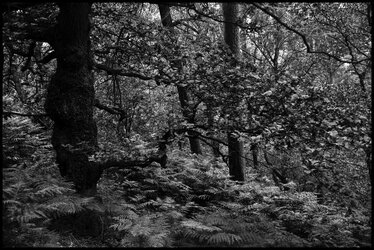
We can now see the way the trees and light intermingle. It looks complex because it is, at least visually. Endeavouring to simplify it as we might with a landscape or portrait just isn’t going to work here. Filling the frame with complexity tells us how the forest is. This is the way it grew. If it were any other way we would concur that humans have had a hand.
Detail is everywhere. We might assume there is too much. Not for the trees there isn’t. They rely on such detain to survive. Every small leaf and vein, stem and flower, trunk and branch are so positioned to get the most light possible. Different plants layer themselves at differing heights to make the most of what is there. The darkest greens at the bottom and the sparse lighter leaves at the canopy.
Through the canopy you will catch glimpses of light. I have heard this is difficult to expose for. Then I say expose it as it is.
And do it all alone. The forest is quiet place. Express that quietness in the images you produce and enjoy the experience while you’re there.
Taking a photograph of this complexity can Ben a challenge which many will not take on. The results are often disappointing at first glance. Nor do they hold much interest to the casual viewer.
Nevertheless, the forest is a worthy adversary.
One thing is for sure. The plane of focus is narrow, yet our vision encourages us to look further into the tree line than we need. Finding a place where the trees form a backdrop is an ideal starting place.
We can now see the way the trees and light intermingle. It looks complex because it is, at least visually. Endeavouring to simplify it as we might with a landscape or portrait just isn’t going to work here. Filling the frame with complexity tells us how the forest is. This is the way it grew. If it were any other way we would concur that humans have had a hand.
Detail is everywhere. We might assume there is too much. Not for the trees there isn’t. They rely on such detain to survive. Every small leaf and vein, stem and flower, trunk and branch are so positioned to get the most light possible. Different plants layer themselves at differing heights to make the most of what is there. The darkest greens at the bottom and the sparse lighter leaves at the canopy.
Through the canopy you will catch glimpses of light. I have heard this is difficult to expose for. Then I say expose it as it is.
And do it all alone. The forest is quiet place. Express that quietness in the images you produce and enjoy the experience while you’re there.
