Fomapan Classic 100 - 120 Film and more.

Oldbones

Member
Registered
I am considering getting some of the above film Fomapan Classic 100 - 120 film for my Kershaw 630.
Have any of you used it and if so how did it do?

Also I have run a roll of Ilford HP5 Plus 400 through my Nikon FG-20, Which I was sort of pleasantly surprised with as they all came out better than expected, but fairly grainy. Especially when I crop.
The photographs were taken on a bright sunny day, and of course by me who is not very experienced with film.
Is 400 too high an ISO for bright sunny days.

I look at other Black and white images and they look fine compared to mine.
Adding that I have learned a lot about photography since I did takes these photographs, and I would take these again but in a totally different manner and perhaps conditions.
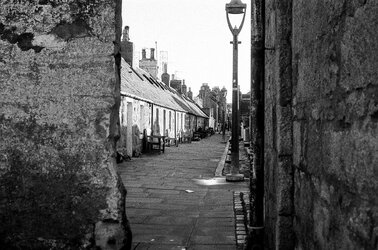
001-256f0.jpg


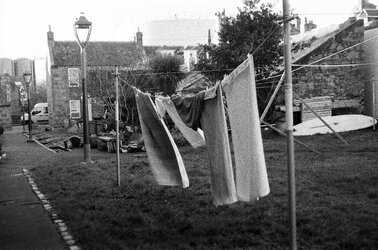
005-d95b3.jpg
 
Last edited:
I sent them to Analogue Wonderland.
When I got them back via a download I was happy because it was my first film photographs.
So that proved the camera a Nikon FG-20 worked and I was able to actually get something.
Light meter works, but I think I went a bit to high with that, I don't know enough about what I am doing with the SLR, although I do realise I will have some trial and error along the way.
Partly my own fault because I did not keep going and learn as I should have done, I could blame it on having other cameras I guess.
 
I find it a little odd that grain is often added to digital photographs artificially to make them look more film-like and yet we try to minimise grain when we are shooting high-speed 35mm. film. With all due respect to Alan's finely honed expertise, I am going to suggest that it interesting to go the other way and see how you can use that high contrast grainy look to your advantage. Some photographers, Daido Moriyama for example, do so and even amplify the effect by printing on really high contrast paper.
 
What will happen if I put 400 ISO film in my camera but set the ISO to 200.
If I start to develop my own film, then I will then need to scan them?
Then print them?
 
I find it a little odd that grain is often added to digital photographs artificially to make them look more film-like and yet we try to minimise grain when we are shooting high-speed 35mm. film. With all due respect to Alan's finely honed expertise, I am going to suggest that it interesting to go the other way and see how you can use that high contrast grainy look to your advantage. Some photographers, Daido Moriyama for example, do so and even amplify the effect by printing on really high contrast paper.
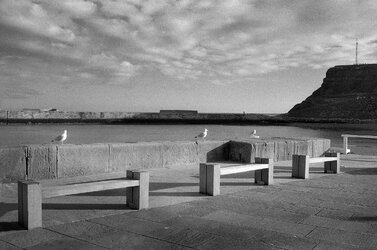
Everything depends on what you want your photographs to look like. When I used to think of myself as a pictorial landscape photographer, I liked visible grain, as I thought it added to the atmosphere of the photograph. Now I have a more documentary approach, I prefer finer, but still visible, grain. Here is an oldthree gulls.jpg photo of gulls at Whitby, taken with Foma 400, chosen partly because it has quite prominent grain, and developed to bring that grain out.
 
Everything depends on what you want your photographs to look like. When I used to think of myself as a pictorial landscape photographer, I liked visible grain, as I thought it added to the atmosphere of the photograph. ...
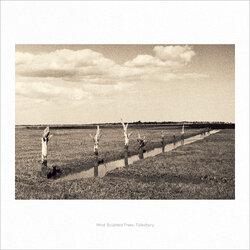
Well said. I try to do similar. Where I want grain I might use 35mm Tri-X and where I don't I would likely use digital or a medium format camera with FP4 or Pan F. The image below, for example, is Tri-X made with my 1956 Canon VT rangefinder. For information, the image was developed and scanned by Photo Hippo, cropped at home and toned in Affinity Photo with a home made LUT. I love the whole wet room thing but, for my own circumstances, these days I use an external lab for developing and either use their scans or scan on a digital camera with a macro lens. Not ideal but good results can be had.

Wind_Sculpted_Trees_at_Tollesbury_1.jpg
 
Last edited:
I am not feeling so bad about grain now, I just need to learn about film and its qualities and also take a lot more care when photographing the scenes that I do.
Get closer and slow down with what I am doing.
I do have a med format camera, which I will run a film through and get it processed.
 
I rarely use 35mm for landscapes now, as I have developed an enduring love affair with my Pentax medium format beastie, which generates the most wonderful negatives.

You can't really crop with 35mm film and hope for best results.
 
I know what you mean about medium format Toby. I have a Bronica RF 645 and it delivers superb results. I sometimes think it is the only camera I need....then I look at my OM1, my 6 x6 Bronica, my RB67 and my home-made 5 x 5 cameras.... and return to my normal confused and indecisive state!
 
Back
Top