

-
Thank You For Visiting... Please Click Here and sign up to contribute
You are using an out of date browser. It may not display this or other websites correctly.
You should upgrade or use an alternative browser.
Goathland North Yorkshire 2010
- Thread starter ian barber
- Start date
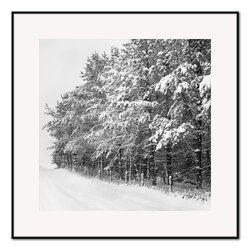

Very Christmassy, and perhaps a little twee for it...?


Don't agree with Simon - it looks far too cold to be twee!
Don't agree with Simon - it looks far too cold to be twee!
I think I meant trite or clichéd but I was probably in an unapreciative mood ( as I seem to be a lot lately)- pay me no heed


A pretty picture.
You have done well to have retained the texture in the snow
This photograph was taken with a Nikon D3s and 24-70mm lens on a tripod.
Anything white with detail has to be controlled to match the output if you are looking to retain the detail.
With this image, I metered from the brightest part of the snow and then opened up the shutter speed by 2 full stops knowing that this would place the bright values up-to the right of the histogram.
Before I open up an image for final editing, I make a decision on what paper it's going to be printed on. I do this for two reasons,
- For textural reasons
- For contrast reasons
Now I had chosen the paper, I had to determine how bright I could make the high values before they were lost to the paper base colour.
For this print, I chose some Marrutt Semi Gloss paper which has a very bright clean white base colour. After printing a small step tablet on the paper, I established that I could place the whites at around RGB 247 and still maintain good tonal separation against the paper base colour, so this was my chosen value for the highlights. I did the same for the low values and in this case the value was RGB 7.
Once you have established the upper and lower range of the output medium, then throughout the editing process, you have some anchor points to work to. Obviously it goes without saying that you need a calibrated monitor to be able to establish this.