


More from Causey. Yesterday was a terrific day for B&W but what I forgot was the gorge was going to be in shadow all the time because of the low sun and exposures were going to be .....difficult! FP4+ Nikon F2a and Nikon 35/70afd All at full apperture hand held.
The culvert image is one that can only be taken at this time of year when the waist high grass and plants allow you access to get a close look at it's construction. 200 years ago this was a clear route for the burn to make its way towards the Tyne with the construction of the Causey Arch in progress there remained the problem of filling in this gap to create an embankment so horse drawn wagons could make their way to the river also. No one knows how many men were involved filling in the gap which was originally over 100 yards wide and 110 feet above the stream. It has been calculated that there was over 1.5 million tons of infill used to do the task. Just sheer hard work by men and horses managed to fill in the gap and also construct a culvert underneath 80 yards long. No mortar was used and the stones are all keyed together and they are as good now as 200 yrs ago. If it were to fail, the valley would be flooded. It is physically inspected twice a year. I
The burn under the trees appears slow and peaceful but in that part it is about 3 feet deep and still running quite quickly. I have never seen it so clear either not a trace of floating mud or debris. There are known to be English Crayfish living and breeding and they demand clean water.
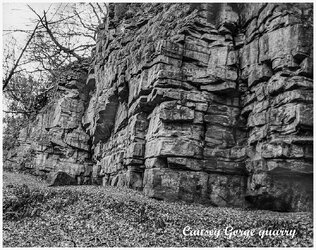
The last image is the remnants of the quarry where they took the stone to both build the Arch and line the culvert. 250 yards from the culvert and about 500 yds from the bridge. It was idealy placed for raw materials
The culvert image is one that can only be taken at this time of year when the waist high grass and plants allow you access to get a close look at it's construction. 200 years ago this was a clear route for the burn to make its way towards the Tyne with the construction of the Causey Arch in progress there remained the problem of filling in this gap to create an embankment so horse drawn wagons could make their way to the river also. No one knows how many men were involved filling in the gap which was originally over 100 yards wide and 110 feet above the stream. It has been calculated that there was over 1.5 million tons of infill used to do the task. Just sheer hard work by men and horses managed to fill in the gap and also construct a culvert underneath 80 yards long. No mortar was used and the stones are all keyed together and they are as good now as 200 yrs ago. If it were to fail, the valley would be flooded. It is physically inspected twice a year. I
The burn under the trees appears slow and peaceful but in that part it is about 3 feet deep and still running quite quickly. I have never seen it so clear either not a trace of floating mud or debris. There are known to be English Crayfish living and breeding and they demand clean water.
The last image is the remnants of the quarry where they took the stone to both build the Arch and line the culvert. 250 yards from the culvert and about 500 yds from the bridge. It was idealy placed for raw materials
Attachments


Last edited:

