


-
Thank You For Visiting... Please Click Here and sign up to contribute
You are using an out of date browser. It may not display this or other websites correctly.
You should upgrade or use an alternative browser.
You should upgrade or use an alternative browser.
Dune
- Thread starter Joe Crumley
- Start date
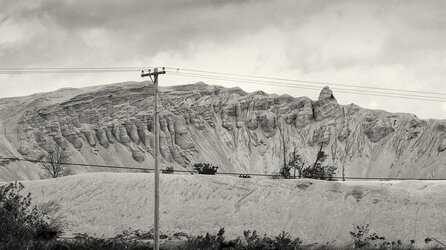
I'm just itchin to cross that fence to get some better photo's. I asked the local sheriff about crossing over. The answer was I'd go to jail. No questions asked. I may end up testing it because who's going to arrest a harmless old fellow for taking a snap or two. Come On.

Like it exactly as is Joe. It's the luminance that makes itThe telephone pole saves this photo, for me. Some of these chat piles were six stories in heights. All of this now is restricted or I'd be in the middle of it. It's still lead rich.
Chris,
I'm conflicted in trying to get an overall shot that shows the dimensions on these field. I often think if I had a drone it would help for a good establishment photograph. At this time most of the mining fields are off limits so a drone would fill the bill. I can't afford to buy one just for that purpose.
As you can imagine there are lots of interesting dune shots. When out there I go kind of crazy shooting. Then when at home the culling process begins. That's a tough job.
I'll give it time to determine which one's I'll keep for the portfolio.
Thanks for the complement John,
The photo's, like this one, are from the mine fields in northern Oklahoma.
The photo's, like this one, are from the mine fields in northern Oklahoma.
I agree Chris. There is a great drama to be written. To make it happen takes a Steinbeck. But the story is there, none the less. It's characterized by a nation in depression, Indian Territory taken away, and a lawless uncontrolled territory. All we have now are the trailing's. The fantastic wealth is a story by itself. None of which was left behind.

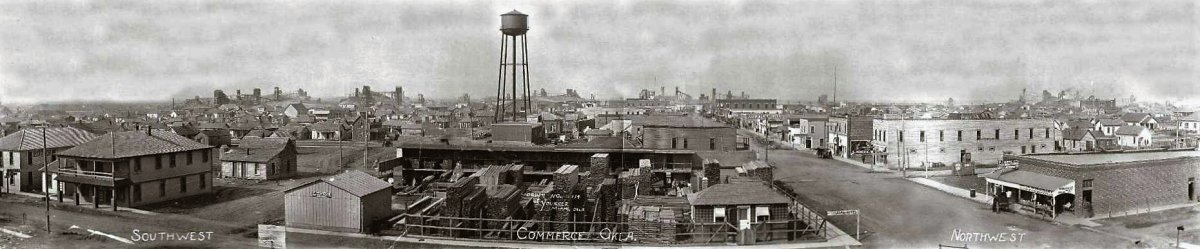
Steve this photo had no significance except to show dimensions. I am concerned my more creative shots don't show the depth and size of the area. What you're seeing here are the remains. Today the town is gone and you wouldn't know anything was ever here. All this happened in a forty year period.
https://en.wikipedia.org/wiki/Tar_Creek_Superfund_site
I understand you don't like the photo. Perhaps I can do better next time.
https://en.wikipedia.org/wiki/Tar_Creek_Superfund_site
I understand you don't like the photo. Perhaps I can do better next time.
Attachments
Last edited:

It seems to me, Joe, that you are faced with quite a difficult task to demonstrate the leavings from a very prosperous metal producing era. I imagine that the spoil heaps are vast and stretch over a wide area and, therefore, either you show this vastness or you concentrate on a very small amount of the residue and leave the rest to the viewer to fill in.
Norman
Norman
I started out with mother natures effects on the fillings. Like you suggest that's probably all I should do. Tackling the vast project itself is a different project.

So, these are tailings?Thanks for the complement John,
The photo's, like this one, are from the mine fields in northern Oklahoma.
.... john
Oops, I should have your other posts.
John, allow me to explain.
" When the Zinc and Lead were removed from mines it was taken to smelters for refining. Leaving behind what you are seeing, trailings. These fields cover sixteen square mile, some were several stories tall. At present the government is collecting these.
By talking to a few former residents, I was told mules were lowered into mines. This was a one way trip where they lived their lives. It was a good life for them with moderate temps and miners bringing them fresh limbs and grasses daily. Another treat they often received is a Chaw of Tobacco. It was said that without their morning Chaw the mules wouldn't be too pleased and were more difficult to control.

Joe - in terms of getting inspiration for your shots at this site have you considered searching for similar places? Eg 'spoil heaps south Wales' finds loads of pictures which might set you off on a productive train of thought, In the case of south Wales it is the waste product of coal mining - you may remember the Aberfan disaster. I'd guess there are similar areas from burnt out mining of other minerals too.

Someone already did it. Joe & I attended the accompanying exhibit earlier this year. There's also a good documentary. Doesn't mean there's not room for another book, by any means.
Hmm .... Wonder who might be able to provide the cover picture?
Yow Chris that book had no soul.
I grouched all the way through that show. It was a display of vivid color snap shots. Ruins like these should never be done in color.
I grouched all the way through that show. It was a display of vivid color snap shots. Ruins like these should never be done in color.
Yow Chris that book had no soul.
I grouched all the way through that show. It was a display of vivid color snap shots. Ruins like these should never be done in color.
Looks like you just set yourself a challenge Joe